Progress of SBT targets and transition plan
In 2025, Aspo and ESL Shipping set science‑based emission reduction targets and prepared transition plans for their part to limit global warming to 1.5°C in accordance with the Paris Agreement. Aspo’s near‑term targets are verified by the SBTi. Aspo’s climate targets cover ESL Shipping and Telko.
Aspo's emission reduction targets

Aspo's transition plan
Scope 1 and Scope 2 GHG emissions, ktCO2 e
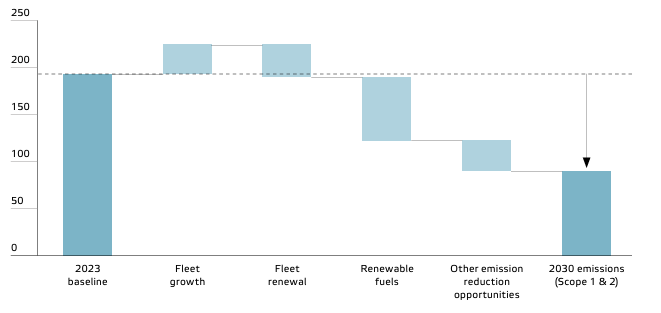
Reduction measures:
-
Fleet renewal: Investments in new vessels and gradual replacement of time‑chartered tonnage with more energy‑efficient vessels.
-
Renewable fuels: All ESL Shipping vessels can use renewable marine diesel, and two vessels can use biogas. The increased use of renewable fuels is supported by legislation and will be further promoted in cooperation with customers.
-
Other reduction measures: The Virtual Arrival operating model, increasing the use of shore power during port calls, and smaller energy‑efficiency investments in existing vessels.
-
Discontinuation of coal transport: Ending the transport of coal used in energy production by 2028; coal transport volumes have already decreased.
-
Supplier commitment to SBTi and setting SBT targets: Aspo encourages its suppliers to set SBT targets.
*Reduction measures refer to concrete actions through which Aspo reduces greenhouse gas emissions at different stages of the value chain.
Greenhouse gas emissions
- Aspo Group’s greenhouse gas (GHG) emissions in 2025 totaled 611,389 tCO2eq (excluding the Leipurin operations)
- The most significant share of the Group’s GHG emissions consists of Scope 3 emissions, which account for 76% of all emissions.
- Scope 1 emissions account for 24%, the majority of which consists of the fuel consumption of ESL Shipping’s vessels.
- Scope 2 GHG emissions account for less than 1%.
- The most significant Scope 3 emissions come from purchased products and services, accounting for 57% of the Group’s Scope 3 emissions. A significant part of this consists of products Telko purchase.
- Other significant Scope 3 emission categories include fuel- and energy-related activities, end‑of‑life treatment of sold products, and upstream transportation and distribution.
SBT-aligned emission reduction target table (excluding the Leipurin operations)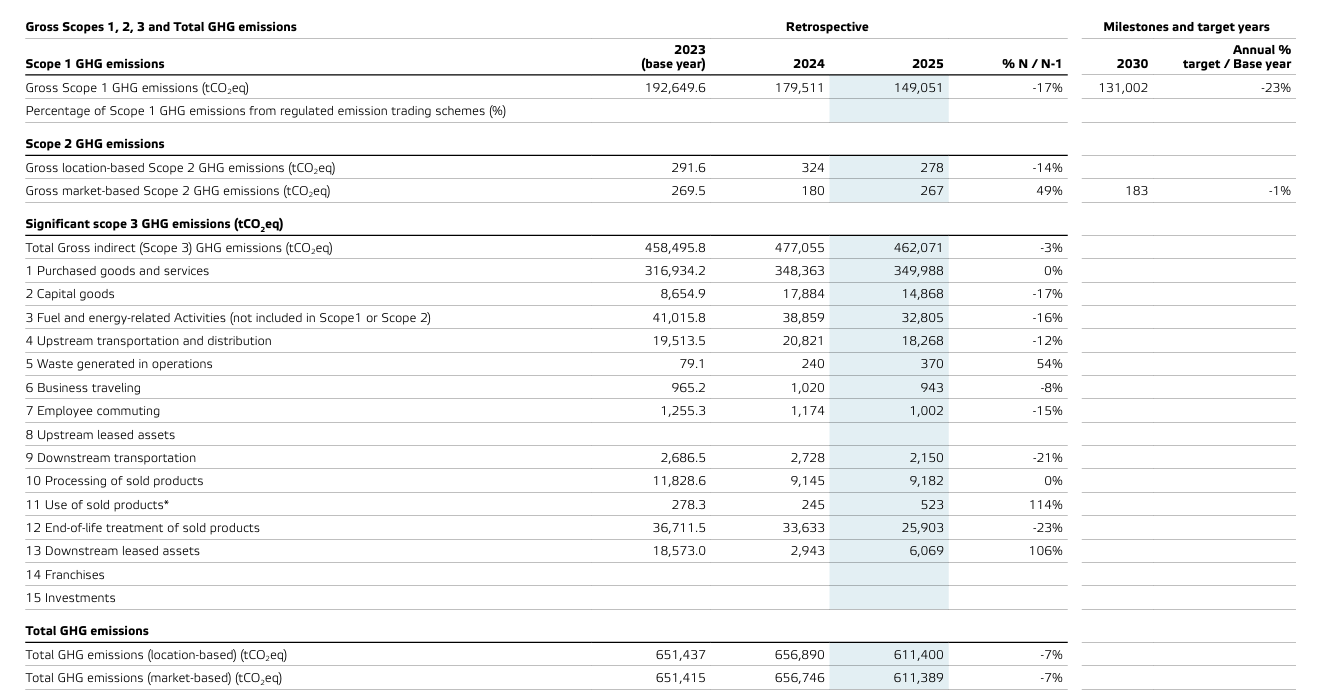
*Emissions from coal used in energy production are presented in Aspo's emission reduction targets table.